10 Questions to Ask Before Choosing an Aluminum Casting Supplier
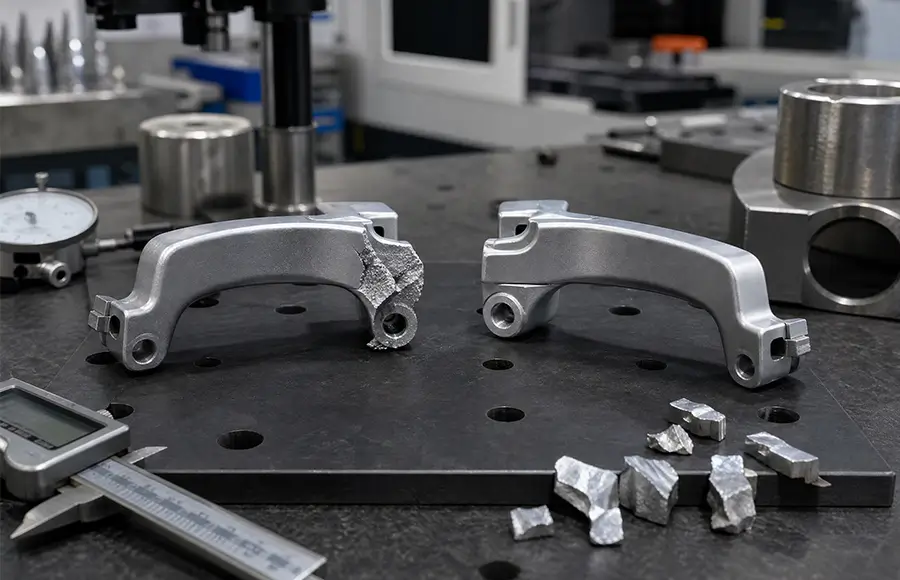
Choosing a casting supplier is one of those decisions that looks simple on the surface and gets complicated fast. Every foundry has a website, every one promises quality, and every one will happily send you a quote. But the difference between a supplier who makes your project run smoothly and one who turns into a two-year headache is not visible in a price sheet. It lives in their equipment, their processes, their people, and how they behave when something goes wrong.
Whether you are sourcing aluminum casting services for the first time or re-evaluating an incumbent supplier, the conversation before the purchase order matters more than most buyers realize. Here are ten questions worth asking, and why each one matters.
1. What casting processes do you run in-house?
Not all casting is the same process. Green sand molding, no-bake sand molding, and permanent mold each have different sweet spots for part size, volume, tolerance, and cost. A shop that only runs one process will naturally steer every job toward that process, whether or not it is the best fit for your part.
Ask what methods they use, what size range each handles, and which one they would recommend for your specific geometry and volumes. A good supplier will explain the trade-offs honestly, including when their own capability is not the right answer. That kind of candor tells you a lot about who you are dealing with.
2. Which alloys can you pour, and how do you verify them?
Alloy selection drives strength, corrosion resistance, machinability, and heat treat response. Common casting alloys like 356, 319, 319, A206, and C355 each suit different applications, from aerospace and automotive components to compressor housings and marine hardware.
The second half of the question is just as important as the first. Ask how they confirm chemistry. Reputable foundries run spectrometry analysis on every melt, not occasionally, and they can provide certification with your parts. If a supplier cannot document what is actually in the metal they pour, you have no way to know whether you got what you paid for.
3. What size and weight range can you handle?
This sounds like a basic capability question, but it is really a question about whether your future needs will fit. A supplier who is perfect for your half-pound bracket today may be useless when your product line grows a 300-pound housing next year.
Ask about their mold size envelope, their melting capacity, and their lifting and handling equipment for large castings. If your roadmap includes bigger parts, you want a partner who can grow with you rather than forcing a second sourcing project down the road.
4. What does your quality control process actually include?
Quality is where vague answers should raise flags. You are not looking for the word “quality.” You are looking for specifics. What testing is standard on every job, and what is available on request?
A strong answer includes things like incoming material testing, sand testing on every batch, hardness and tensile testing, dimensional inspection of first articles, and non-destructive options like X-ray or liquid penetrant inspection for critical parts. Ask whether inspection happens at defined points in the process or only at the end. The difference matters, because problems caught at the melt or molding stage are cheap, and problems caught at final inspection have already consumed all the labor and material that went into the part.
5. Can you handle finishing, heat treatment, and machining, or do you outsource them?
A raw casting is rarely a finished part. It typically needs gating removed, grinding, shot blasting, and surface prep, and many parts also need heat treatment or machined features. Every one of those steps that gets outsourced is another handoff, another lead time, another chance for things to fall through the cracks.
Ask what happens under the supplier’s own roof and what gets sent out. In-house finishing and heat treating usually mean faster turnaround, single-point accountability, and fewer finger-pointing sessions when a dimension comes in out of spec. Outsourcing is not automatically disqualifying, but you should know the logistics before you commit.
6. What do you need from me to quote accurately?
This question reveals how experienced a supplier is with new projects. A good foundry will ask you for a 3D model or a fully dimensioned drawing, expected annual volumes, alloy preferences or application details, tolerance requirements, and any industry-specific standards you need to meet.
If a supplier quotes from a napkin sketch without asking clarifying questions, be careful. Either the quote is a placeholder that will change, or they are not thinking hard enough about your part. The quality of the questions they ask you is a preview of the quality of the parts they will send you.
7. Who is my point of contact, and how do projects get managed?
Casting projects involve engineering questions, tolerance discussions, first article reviews, and the inevitable mid-production change request. You need to know who picks up the phone.
Ask whether you get a dedicated project manager or an engineer, or whether you will be calling a general inbox. Ask how they handle engineering changes once tooling exists, and how they communicate delays. Suppliers with a structured project management approach are far less likely to surprise you, and surprises in manufacturing are almost always expensive.
8. What are your realistic lead times, for first articles and for production?
Notice the word realistic. Every supplier quotes optimistic lead times. What you want to understand is the full picture: how long tooling or pattern work takes, how long first articles take, and what the ongoing production rhythm looks like once the job is running.
Also ask what capacity flexibility looks like. If your volumes double next year, can they absorb it? If you have a rush order, how do they prioritize? A foundry running automated molding equipment for high-volume work alongside flexible molding for large parts has more room to adapt than a single-process shop.
9. Can you share examples of similar work?
Track record is not about name-dropping big customers. It is about relevant experience. A foundry that has poured thousands of parts for food processing equipment already understands the cleanability, corrosion, and regulatory expectations that come with that industry. One that has never cast anything more demanding than a decorative fitting will have a learning curve on your critical component.
Ask for examples of parts similar in size, alloy, and application to yours. Ask what their scrap and rejection rates look like on those jobs. Suppliers who are proud of their work will talk freely. Suppliers who deflect should be pressed.
10. What happens when something goes wrong?
This is the question most buyers never ask, and it is the one that matters most. Eventually, somewhere, a part will come in out of tolerance, a shipment will slip, or a defect will escape. What separates a good supplier from a bad one is not whether problems happen. It is what they do next.
Listen for words like root cause, corrective action, and containment. A supplier who talks about investigating why a problem happened and preventing recurrence is a partner. A supplier who talks about whose fault it is, or hides behind the purchase order terms, is a vendor, and you will spend your career managing them.
A Final Thought
None of these questions require technical expertise to ask, but the answers will tell you an enormous amount about how a foundry operates. You are not just buying castings. You are buying a process, a quality system, and a relationship that will affect your product for years. Take the time to ask the questions up front, and preferably tour the facility before you commit. Walking the floor, watching a pour, and seeing how the shop is maintained will tell you more in an hour than a stack of brochures ever will. The cheapest quote is rarely the cheapest outcome, and the supplier who answers these ten questions well is usually the one who earns the next ten years of your business.